Decoding Bengaluru’s Rise as India’s Second Costliest Housing Market

21 Apr 2026
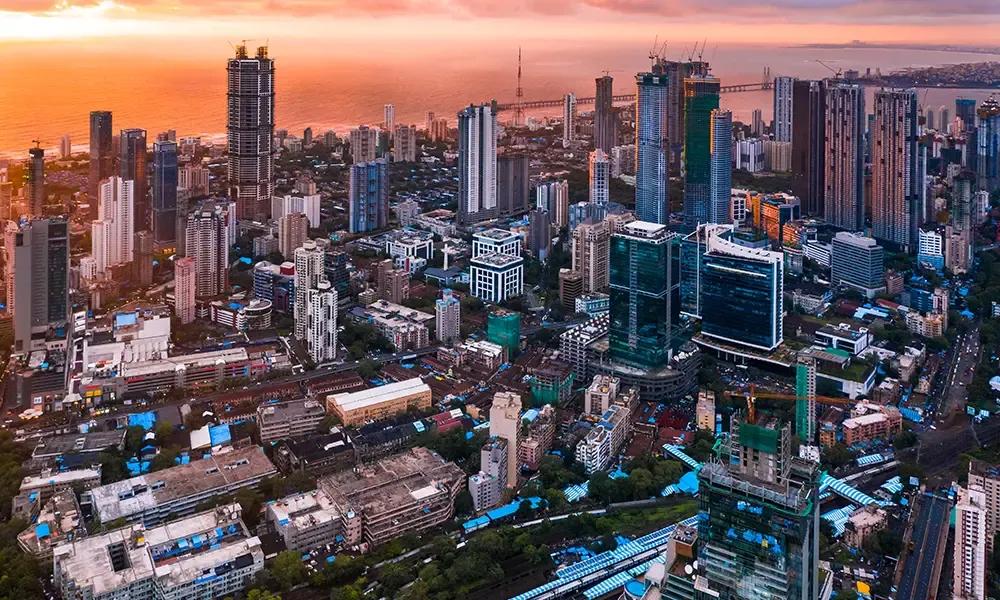
Bengaluru has long been synonymous with opportunity. It’s a city that draws ambition from across the country. Now, it carries another distinction. With average housing prices rising 21% in the fourth quarter of 2025 to Rs 9,500 per square foot, the city has overtaken every other Indian market except Mumbai, cementing its place as the country's second-costliest residential destination. This is not a fleeting spike. It reflects a sustained demand, a maturing employment ecosystem, and a development pipeline that has kept pace with the city's expanding aspirations.
End-User Demand Takes Lead
Bengaluru's rise to the second spot in India's residential price rankings did not happen in isolation. It is the outcome of years of compounding economic activity, as the city has attracted capital, talent, and enterprise at a scale few Indian metros can claim. The technology and startup ecosystem, the backbone of the city's identity for years, has created a buyer profile that is younger, better compensated, and increasingly willing to invest in homeownership rather than defer it.
That willingness is showing up in the choices buyers are making. Three-bedroom homes account for over half of all residential sales in the city, favoured by nuclear families, dual-income professionals, and non-resident Indians who are buying to live, not to trade. Average flat sizes have also grown by 12%, and the increase shows rising incomes translating directly into larger, better-equipped homes.
This demand feeding Bengaluru's market is largely end-user driven, which insulates the market from the sharp corrections that purely investor-driven markets are vulnerable to. Even as national housing sales across India's top eight cities fell during 2025, Bengaluru bucked the trend, recording 12.7% year-on-year growth in residential sales. This divergence suggests that the city is operating on its own economic logic, one where appetite for quality housing outruns broader market hesitation.
Premiumisation of Supply
In 2025, developers launched close to 61,000 units in Bengaluru through the year, with activity particularly pronounced in the first and fourth quarters. The sustained pipeline was not blind optimism but a calculated read of where the market was headed and, more importantly, who it was headed toward.
The more consequential shift was qualitative. Developers moved away from affordable and mid-income segments, pivoting toward premium and high-end projects to meet the appetite of the city's expanding affluent buyer base. North Bengaluru, Sarjapur Road, and Whitefield emerged as the primary growth corridors, attracting launches from established names whose brand premium commands pricing power independent of broader market conditions. Projects backed by reputed developers accounted for over 22% of quarterly sales in Q4 alone, a figure that speaks to the pull of quality supply in a market that has grown discerning.
Where absorption varied across segments, the market found its own equilibrium. Mid-income supply took longer to move, but premium inventory held its ground, prices stayed firm, and residential values rose 3%-4% quarter-on-quarter in Q4. This trend is the hallmark of a maturing market, one with enough depth and diversity to self-correct without losing momentum. Bengaluru's supply side, in that sense, has grown as sophisticated as its demand.
Conclusion
The question worth asking now is not how Bengaluru got here, but where the fundamentals point from here. Early data from Q1 2026 provides some clarity on that. High-end and luxury launches have climbed to 68% of all new supply, up from 53% in the previous quarter, and capital values have appreciated 5%-6% annually.
Although the ongoing conflict in West Asia has introduced some uncertainty, it is paradoxically working in Bengaluru's favour. NRIs based in the Middle East, particularly those eyeing premium and luxury homes, are looking homeward, keeping Bengaluru firmly in their line of sight.
For a market still expanding its infrastructure, deepening its talent pool, and attracting capital from across the world, the current ranking is a milestone on a longer upward climb.