The Emotional Architecture of a Malayali Home

22 Jun 2026
The Emotional Architecture of a Malayali Home
A home in Kerala is rarely understood only through square footage, floor plans, or finishes. Its meaning is shaped by the people who live there, the memories it holds, the rituals it supports, and the relationships it makes space for.
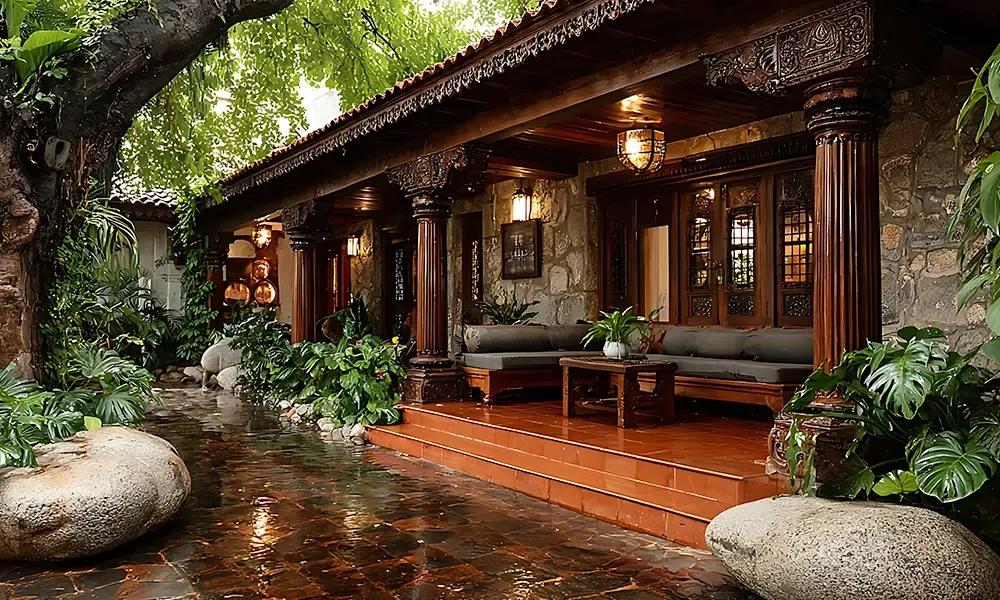
A Malayali home may be traditional or contemporary, independent or apartment-based, urban or rural. It may have a sloping tiled roof, a central courtyard, a compact balcony, or floor-to-ceiling windows. Its form can change completely. Yet beneath those visible differences, certain emotional patterns often remain.
There is usually a strong relationship between home and family. Space is planned not only for present residents but also for visiting parents, relatives, children returning from abroad, and gatherings that may happen only a few times a year. Kitchens carry memories. Verandahs become places of conversation. Prayer spaces anchor daily routines. Storage often contains far more than objects. It holds history.
This is the emotional architecture of a Malayali home: the invisible design created by memory, climate, hospitality, family, and belonging.
A Home is Often Larger Than the People Living in it
In many households, the number of people permanently living in the home does not fully explain how the home is used.
A couple may live alone, but the house still needs to accommodate parents during visits. Adult children may work in another city or country, yet their room remains emotionally present. Relatives may arrive during festivals, weddings, illnesses, or school holidays. A dining area may feel oversized on an ordinary weekday but become essential during family gatherings.
This creates a distinctive planning logic. The home is not designed only around its current occupants.It is designed around the possibility of return.
That possibility carries emotional weight. A spare bedroom is not simply unused space. It may represent a child who has moved abroad but is still expected home. An additional bathroom may exist because ageing parents visit regularly. A larger living room may reflect a family’s habit of gathering during Onam, Christmas, Eid, or important milestones.
The Malayali home often prepares for people who are absent but never entirely gone.
Memory Lives in Everyday Objects
Homes accumulate objects, but some homes preserve them as part of family identity.
An old wooden chest, brass lamp, framed photograph, grandfather clock, wedding vessel, or inherited chair may remain even when the rest of the interior becomes modern. These objects are rarely kept only for visual appeal. They connect the present household with earlier generations.
A renovated home may include modular furniture and contemporary lighting while still protecting a traditional uruli, nilavilakku, or wooden cabinet. This contrast does not feel inconsistent. It reflects the way many Malayali families understand modernity: progress does not require erasing memory.
Even ordinary objects can carry emotional meaning. A steel container may remind someone of their mother’s kitchen. A dining table may have hosted decades of family decisions. A balcony chair may belong permanently to a parent or grandparent.
This is why emotional architecture cannot be photographed easily. It is experienced through association.
The Verandah Represents More Than an Architectural Feature
The traditional verandah, or sit-out, is one of the most emotionally recognisable parts of a Kerala home.
It sits between the private interior and the outside world. It is where guests are first received, neighbours pause for a conversation, children remove wet footwear, elders watch the road, and families sit during rain.
The verandah represents a softer boundary. It allows interaction without requiring formal entry into the home. It reflects a culture where privacy matters, but social connection remains close.
In modern apartments, the traditional verandah may be replaced by a balcony, entrance foyer, shared corridor, or landscaped common area. Yet the need it served has not disappeared. People still want a semi-open space where they can sit, observe, talk, or simply feel connected to the outdoors.
A well-used balcony in Kochi may perform much the same emotional function as the front sit-out of an ancestral home.
The Kitchen is Often the Emotional Centre
In many Malayali homes, the kitchen carries more emotional energy than any other room.
It is where routines begin early, where tea is prepared repeatedly, where festival dishes take shape, and where family preferences are remembered without being written down. The kitchen knows who prefers less sugar, who avoids coconut, who wants extra curry, and who will arrive hungry after a long journey.
Food is one of the primary ways cares is expressed in Kerala. As a result, the kitchen is not merely functional. It is a place of labour, affection, memory, and identity.
Traditional kitchens were often enclosed, practical, and closely connected to utility spaces. Modern homes may prefer open kitchens, breakfast counters, and cleaner visual lines. Yet many families still need strong storage, separate work areas, effective ventilation, and enough space for intensive cooking.
This is where global design trends are often adapted rather than copied. A visually open kitchen may still include a hidden utility area. A modern island may coexist with large vessels used for family gatherings. The design changes, but the emotional role remains.
Dining Spaces Hold Family History
The dining table in a Malayali home is rarely only for meals. It often becomes a place for homework, conversations, arguments, planning, medicine schedules, newspaper reading, and financial discussions.
During festivals or family visits, it becomes the centre of activity. Extra chairs appear. Serving dishes multiply. People eat in rounds. Children move in and out. The meal becomes less about perfect presentation and more about participation.
In some households, the dining space also reflects generational change. Earlier family members may have eaten together at fixed times. Today, work schedules, school routines, and online meetings may make that difficult.
Even so, the desire to gather around food remains strong. The dining area continues to symbolise togetherness, even when everyday life does not always follow the ideal.
Climate Shapes Emotion as Much as Comfort
Kerala’s climate has always influenced residential design. Heavy rain, humidity, strong sunlight, and warm temperatures shape how homes are built and experienced.
Sloping roofs, shaded verandahs, courtyards, deep overhangs, ventilation openings, and laterite or timber elements were not only aesthetic choices. They made homes more comfortable and responsive to their environment.
Climate-sensitive design also creates emotional experiences. The sound of rain on a tiled roof, the smell of wet earth near a courtyard, the movement of curtains in a cross breeze, or afternoon light filtering through trees can become part of how a person remembers home.
Modern construction sometimes focuses heavily on sealed interiors and mechanical cooling. Yet many buyers still seek natural light, airflow, shaded balconies, and greenery. These are not only sustainability preferences. They reconnect residents with a familiar sensory idea of Kerala living.
A home feels emotionally rooted when it responds to the place in which it stands.
Prayer Spaces Create Continuity
Many Malayali homes include a dedicated or symbolic space for prayer. It may be an entire room, a small alcove, a shelf, a lamp, or a carefully maintained corner.
The size matters less than the role it plays. Prayer spaces create continuity in daily life. They support routines followed by parents, grandparents, and children. They become especially important during festivals, difficult periods, major decisions, and family transitions.
In a modern apartment, the prayer space may be compact and integrated into the interior design. In a traditional home, it may be more prominent. Yet in both cases, it acts as an emotional anchor.
It reminds residents that the home is not only a place for sleeping, eating, and working. It is also a place where belief, gratitude, memory, and hope are practised.
Hospitality Shapes the Way Space is Used
Malayali hospitality is often generous, practical, and food centred. Guests are usually offered something to eat or drink, even when the visit is brief. This habit influences how homes are planned.
Living rooms need to receive people comfortably. Kitchens must support unexpected preparation. Guest bedrooms, extra bedding, dining capacity, and storage often matter because visits may extend.
Hospitality also creates a distinction between formal and informal spaces. Some homes maintain a carefully arranged living room for guests, while the family spends most of its time elsewhere. Others prefer more open, relaxed layouts where visitors enter directly into everyday life.
Both approaches reflect the same idea: the home should be ready to welcome.
This readiness is emotional as much as practical. It says that there is room for others.
Privacy and Togetherness Are Constantly Negotiated
Traditional family life often placed greater emphasis on shared routines and collective decision-making. Modern households increasingly value privacy, independence, and personal space.
The Malayali home now must hold both expectations.
Young adults may want private rooms, work areas, and greater autonomy. Older family members may prefer more shared time and open access. Couples may want separation between work and family zones. Children may need quiet study areas. Visiting parents may require comfort without feeling disconnected.
Good emotional architecture does not force one model of family life. It creates enough flexibility for people to be together and apart.
A bedroom with a reading corner, a balcony connected to the living room, a flexible study, or a separate family lounge can help residents negotiate these needs.
The goal is not maximum openness or maximum separation. It is a balance that allows closeness without exhaustion.
The Ancestral Home Carries a Special Weight
For many Malayalis, the ancestral home remains emotionally important even after family members move elsewhere.
It may be occupied by ageing parents, used only during visits, or maintained despite practical difficulties. The house may no longer match modern expectations, but it represents continuity, family history, and a physical connection to one’s place of origin.
Selling or altering such a home can therefore become emotionally difficult. Decisions about land, renovation, inheritance, and maintenance are rarely purely financial.
The ancestral home often holds memories of childhood, grandparents, festivals, summer holidays,and family ceremonies. It may also carry conflict, obligation, and differing expectations between generations.
This complexity is part of its emotional architecture. A house can be deeply loved and difficult to maintain at the same time.
Migration Has Made the Idea of Home More Layered
Migration is central to Kerala’s social history. Generations of Malayalis have lived in the Gulf, Europe, North America, Australia, and other parts of India.
For these families, home may exist in more than one place.
A person may live abroad for decades but continue to call a town or neighbourhood in Kerala “home.” They may build a house for future return, support renovations from overseas, or maintain rooms that are occupied only during annual visits.
This creates homes shaped by both absence and aspiration. Some are built as symbols of achievement. Others are designed around a retirement that may be years away. Many combine international influences with familiar Kerala preferences.
The emotional challenge is that the imagined future and lived reality do not always match. Children may not return permanently. Parents may find large houses difficult to maintain. A dream home may remain closed for much of the year.
Even then, the home continues to represent belonging. It becomes a physical promise that return remains possible.
Apartment Living is Creating a New Malayali Home
The emotional architecture of a Malayali home is no longer limited to independent houses.
Apartments in Kochi, Thiruvananthapuram, Kozhikode, Thrissur, and other urban centres are creating new domestic patterns. Families have less private outdoor space but greater access to shared amenities and managed services. Neighbours may come from different districts or even countries.
Inside the apartment, familiar emotional needs remain. There is still a desire for a prayer corner, a functional kitchen, room for visiting family, storage for festival items, and a balcony that connects the home to weather and greenery.
Outside the apartment, community spaces take on roles once performed by local roads, courtyards, and neighbourhood grounds. Children’s play areas, clubhouses, walking paths, and festival gatherings help residents build belonging.
The form changes, but the emotional priorities continue.
Storage Often Holds More Than Clutter
Storage is an understated part of the Malayali home.
Homes often contain festival decorations, inherited vessels, extra bedding, schoolbooks, documents, pickles, spices, gifts brought from abroad, and items kept “in case they are needed later.” Some of this may appear excessive from a minimalist perspective.
But storage reflects preparedness, memory, and family continuity. Objects are kept because they may be useful during a gathering, meaningful to another generation, or difficult to replace emotionally.
Modern homes with limited space create tension around this habit. Families have to decide what to retain, display, relocate, or let go.
The process can be surprisingly emotional because decluttering is not always about objects. It can feel like editing family history.
A Home Changes as the Family Changes
The most meaningful homes are not static. They adapt as family life changes.
A child’s room becomes a study, then a guest room. A work-from-home corner appears in the living room. Grab bars are added for ageing parents. A balcony becomes a garden. A formal room becomes a more useful family space.
These changes reveal that emotional architecture is created over time. The original floor plan is only the beginning.
Families continually rewrite the home according to new needs, losses, arrivals, and routines. A house becomes personal through these adjustments.
This is why two identical apartments can feel completely different. One is shaped by the lives lived inside it.
What Makes a Malayali Home Feel Complete
There is no single feature that makes a home distinctly Malayali. It is not a tiled roof, courtyard, wooden furniture, or traditional décor alone.
The feeling comes from the relationship between space and life.
A Malayali home often feels complete when it supports family without denying privacy, welcomes guests without becoming formal, remembers the past without resisting change, and responds to Kerala’s climate rather than ignoring it.
It allows food, prayer, conversation, rest, work, celebration, and return to coexist.
Its emotional value is not determined only by size or price. A compact apartment can carry as much belonging as a large ancestral house when it reflects the people who live there.
Conclusion
The emotional architecture of a Malayali home is built from more than walls. It is shaped by family memory, hospitality, food, faith, climate, migration, and the expectation that people will leave and return.
These emotional needs continue even as residential design changes. Traditional houses may give way to apartments, open kitchens may replace enclosed ones, and balconies may perform the role once held by verandahs. Yet the deeper purpose remains familiar.
A home must make space for memory and change. It must support both togetherness and privacy. It must welcome the present while remaining connected to those who came before and those who may return.
That is what makes a Malayali home emotionally distinctive. It is not simply where life happens. It is where belonging is continually rebuilt.