From Screens to Sales: The Power of Virtual Property Tours

15 May 2026
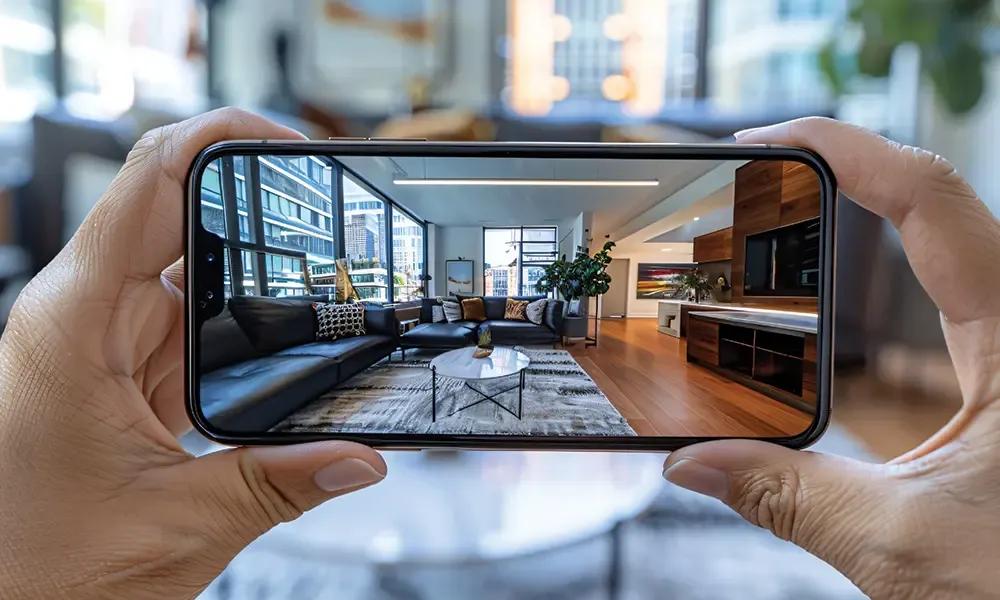
Not so long ago, buying a home was almost entirely a physical experience. You drove across the city on a weekend, rang a dozen doorbells, squinted at rooms in afternoon light that never seemed to do them justice, and argued with your partner about whether the kitchen was actually big enough. It was exhausting, time-consuming, and oddly charming in its inefficiency.
Then came a combination of forces, pandemic-era restrictions, better smartphone cameras, faster internet, and a generation of buyers who grew up shopping for everything online, and the way people search for and shortlist property shifted significantly. Virtual tours moved from a niche add-on to a mainstream expectation across much of the real estate market.
But are they actually the new normal? Or is this a story about a technology that peaked during a specific moment and is now settling into a supporting role? And for buyers, sellers, and renters navigating today's market, what do you actually need to know about virtual property tours to use them well?
What Exactly is a Virtual Property Tour?
The term gets used fairly loosely, so it's worth clarifying what we're actually talking about. Virtual property tours exist on a spectrum ranging from the relatively simple to the technically sophisticated.
At the basic end, you have video walkthroughs, essentially a video recorded by the agent or developer walking through the property, often narrated, sometimes edited with music and on-screen text. These are widely available, easy to produce with just a decent smartphone, and genuinely useful for getting a first sense of a space's layout and condition.
Moving up the scale, you have 360-degree photography, still images captured with a special camera that allows the viewer to look around in any direction. These are typically stitched together into a virtual tour that you can navigate by clicking between rooms, giving a more controlled and explorable experience than a linear video.
At the more sophisticated end, there are full 3D virtual tours created using technologies like Matterport, which creates an actual three-dimensional model of a space that you can navigate freely, measure distances within, and even view as a dollhouse floor plan. These require specialist equipment and are more expensive to produce, but they provide a property viewing experience that comes significantly closer to the physical version.
Finally, there are live virtual tours, video calls where an agent physically moves through the property while the prospective buyer watches, asks questions in real time, and can direct the agent to show specific areas or details. These combine the immediacy of physical presence with the convenience of remote access, and many buyers find them more reassuring than pre-recorded alternatives.
How Indian Buyers Are Using Virtual Tours
India's real estate market has some specific characteristics that make virtual tours particularly relevant. The NRI and diaspora buyer segment is substantial, millions of Indians living abroad maintain strong connections to their home cities and regularly invest in property back home. For these buyers, flying in specifically to view properties has always been expensive and often impractical. Virtual tours don't eliminate the challenge, but they radically change the shortlisting process.
Instead of arriving in India with two weeks and a vague list of possibilities, an NRI buyer today can do serious preliminary work remotely, eliminating unsuitable options, identifying genuine contenders, and arriving with a tightly focused shortlist. The on-the-ground visit then becomes a verification exercise rather than a discovery exercise, which is far more efficient for everyone involved.
Within India, virtual tours have proven particularly valuable in high-growth corridors where buyers from other cities are investing. Someone in Bengaluru looking at Kakkanad properties, or a Delhi buyer evaluating a project in Kochi, can do meaningful due diligence without a dedicated property-viewing trip. Developers in tech-driven submarkets have been among the fastest adopters, recognising that their buyers, IT professionals who are comfortable with digital tools, respond well to high-quality virtual presentation.
What Virtual Tours Do Well
Let's be direct about where virtual tours genuinely add value, because the marketing around them sometimes overclaims in ways that create frustration.
They are excellent for understanding spatial layout. A good 3D tour or even a thoughtfully filmed video walkthrough gives you a clear sense of how rooms connect, whether the flow of a flat makes sense, and whether the proportions of spaces match what you want. This is probably the hardest thing to judge from photographs alone, and it's where virtual tours earn their keep.
They are good for understanding finish quality and materials, up to a point. If the property has been recently finished or is a show flat, a high-resolution tour can give you a reasonable sense of the flooring, cabinetry, tile work, and fixture quality. This isn't foolproof, screens render colours differently, and photography can flatter or flatten materials, but it's meaningfully better than relying on description alone.
They are very effective for time management. Being able to do a fifteen-minute virtual tour before deciding whether a property merits a physical visit saves enormous amounts of time for serious buyers. If you're evaluating a dozen properties, the difference between virtual shortlisting and physically visiting all twelve is measured in days.
And they are increasingly useful for emotional engagement. Well-produced virtual tours, particularly of furnished properties, can create a genuine sense of what it would feel like to live in a space. This matters because purchasing decisions are rarely purely rational, how a home feels matters as much as what it measures.
Where Virtual Tours Fall Short
Honesty matters here, because the limitations of virtual tours are real and buyers who ignore them sometimes make costly mistakes.
Smell and sound cannot be virtualised. A property near a drainage channel, under a flight path, adjacent to a generator exhaust point, or in a building with chronic damp issues will not reveal these qualities through any screen. These are things you only discover in person, and they matter enormously for liveability.
Neighbourhood context is difficult to convey. A flat might look perfect on a tour, but sitting in the neighbourhood for an hour reveals things no camera captures, the quality of the road, the nature of the commercial activity nearby, the noise levels at peak hours, the general social character of the area. First-time buyers in a city unfamiliar to them should be particularly cautious about skipping this step.
Construction quality is not reliably assessed virtually. For under-construction or recently completed properties, a virtual tour cannot substitute for physically testing that taps work, that doors shut properly, that the slab sounds solid, that windows seal correctly. These are fundamentals that an experienced buyer or a trusted inspector can assess in person.
And finally, virtual tours are only as trustworthy as the people producing them. A well-resourced developer or agent will produce an honest, high-quality tour. Others will use wide-angle lenses that make rooms appear larger than they are, shoot in flattering light conditions, and carefully frame out problem areas. Experienced buyers learn to read these signals; first-time buyers may not.
Best Practices for Buyers Using Virtual Tours
If you're using virtual tours as part of your property search, a few practices will help you get genuine value from them rather than being misled by them.
- Always follow up with a live video call tour or in-person visit before making any financial commitment. Virtual tours are for shortlisting, not final decision-making.
- Pay attention to what the tour doesn't show. If there are rooms missing from a tour, or the camera seems to avoid certain angles, ask why. A good agent will have an innocent explanation; an evasive response is a signal to probe further.
- Cross-reference with satellite imagery and street-level maps. You can learn a lot about a property's neighbourhood, orientation, and surrounding context from tools that are entirely separate from what the developer or agent shows you.
- Request raw, unedited video if the formal tour seems too polished. Many agents will accommodate this request, and the footage is often more revealing than the produced version.
- If you're buying from a distance, consider engaging a local property consultant or trusted person to do a physical visit on your behalf before you commit. This is not redundant, it's prudent.
Final Take
The technology underlying virtual property tours continues to improve rapidly. Augmented reality features that let you visualise furniture placement, AI-driven tools that can estimate sunlight patterns at different times of day, and increasingly realistic 3D modelling of under-construction projects are all moving from experimental to commercially available.
In the Indian market specifically, as smartphone penetration continues to deepen and 5G connectivity reaches more cities, the quality threshold for virtual tours available to buyers is rising steadily. What counts as an adequate virtual presentation today will look basic in five years.
But for all the technology, the fundamental nature of buying a home is unlikely to change dramatically. It remains a large financial commitment with significant life implications, made by people who are not just evaluating square footage but imagining a future. Virtual tools will keep getting better at helping with the rational, measurable parts of that decision. The parts that require presence, intuition, and human judgment will remain irreplaceable.
Virtual tours are the new normal, as a first step. As a final step, the physical world still has a lot to say.
Enjoy your virtual tour experience here.
Frequently Asked Questions
Can I buy a property in India without physically visiting it?
Technically yes, and many NRI and outstation buyers do complete transactions based primarily on virtual tours and documentation. However, this carries meaningful risk. Most advisors recommend that at least one trusted person, a family member, a local property consultant, or an independent agent, physically visits and verifies the property before you commit funds. Virtual tools have made remote buying significantly safer than it was, but they haven't eliminated the value of physical verification.
Are 3D virtual tours more reliable than standard video walkthroughs?
3D tours from reputable platforms generally give a more accurate spatial representation than linear video, because they allow you to control the viewing angle and navigate the space yourself rather than following a scripted path. However, all virtual formats can be used selectively or flatteringly. The format matters less than the trustworthiness of the developer or agent presenting the tour.
How do I tell if a virtual tour is accurately representing a property?
Watch for signs of heavy post-production editing, inconsistent lighting between rooms, and areas that seem to be avoided or glossed over. Request supplementary photos taken with a standard phone camera, which is harder to manipulate than a professional production. Cross-reference the apparent room sizes against the floor plan measurements provided. And always treat a virtual tour as a starting point for questions rather than an end point for decision-making.
Do developers in Kerala offer virtual tours for under-construction properties?
Many established developers, particularly those targeting NRI buyers and IT professionals, now offer virtual tours of both completed show flats and rendered 3D walkthrough experiences of under-construction projects. The quality varies significantly between developers. For under-construction properties, 3D renders can be useful for visualising the final product, but they should be compared carefully against the actual floor plan dimensions and specifications.
What questions should I ask during a live virtual tour?
Ask the agent to open windows and doors so you can hear the ambient sound outside. Ask them to show you the view from each window, this is often edited out of pre-recorded tours. Ask about the floor level, direction of orientation, and distance to the nearest noisy or disruptive features. Ask them to show you the corridor outside the unit, the lift lobby, and the parking area. These areas are often absent from standard virtual tours and tell you a lot about daily living.
Are virtual tours here to stay, or is this a post-pandemic trend?
Virtual tours are here to stay, though their role will evolve. The pandemic accelerated adoption of technology that was already improving and already serving a genuine need, particularly for remote, NRI, and outstation buyers. These use cases don't disappear with the end of any particular crisis. What has changed permanently is the expectation among buyers that a digital-first property search is a legitimate and well-supported option, not an inferior substitute for the traditional approach.