How Metro Connectivity Is Redefining Property Demand in Electronic City

01 Dec 2025
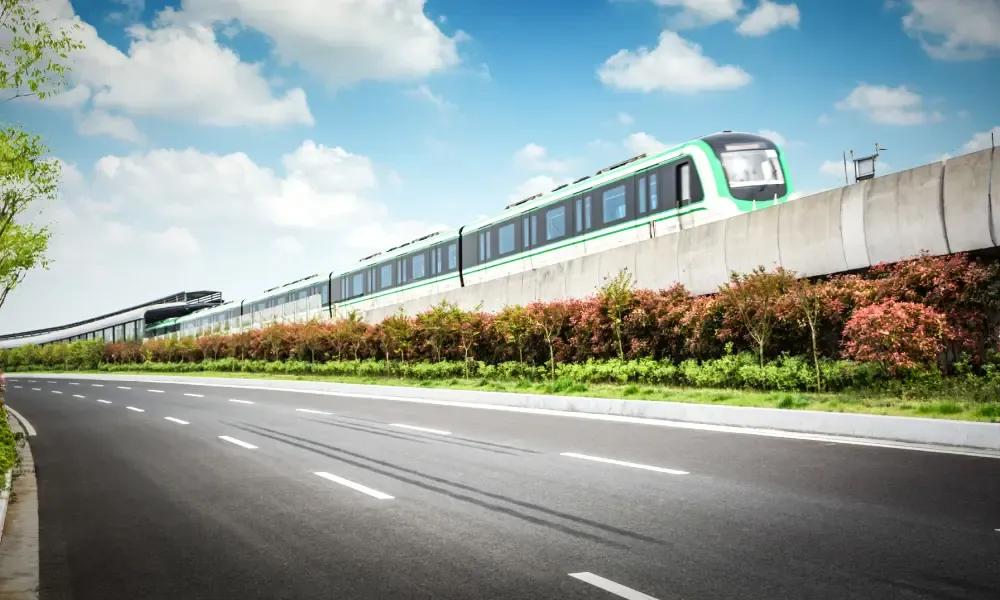
In Bengaluru, every new metro line quietly redraws the city map. Over the last five years, the city has seen residential prices rise by roughly 40%, outpacing other major metros in India, with the sharpest jumps clustering around operational and upcoming metro corridors.
With the Bangalore metro Yellow Line (RV Road–Bommasandra corridor) now operational, connecting 16 elevated stations including key stops near Electronic City, the narrative has shifted from “How do I reach office?” to “How close am I to the station?”.
In this context, developers with a strong, long-term presence, such as Puravankara, which has already curated residential communities and commercial spaces around the Electronic City–Hosur Road corridor, are seeing heightened interest from both end-users and investors.
Let’s unpack how Electronic City metro connectivity is reshaping demand for apartments in Electronic City.
Metro Yellow Line Overview
The Bangalore metro Yellow Line is the backbone of today’s Electronic City metro connectivity story.
Stretching roughly 18.8–19.15 km from Rashtreeya Vidyalaya Road (RV Road) to Delta Electronics Bommasandra, this fully elevated corridor stitches together some of South Bengaluru’s most important tech and industrial hubs.
Commissioned for commercial operations in August 2025, the line has 16 stations, including critical stops at Jayadeva Hospital (future Pink Line interchange), Central Silk Board (future Blue Line interchange), Bommanahalli, Hosa Road, Electronic City, Infosys Foundation Konappana Agrahara, Biocon Hebbagodi and Bommasandra.
End-to-end travel takes around 31–38 minutes, a dramatic improvement over pre-metro road commute times on Hosur Road.
For residents and office-goers, it’s an everyday upgrade.
Recent reports show the Yellow Line already clocking over one lakh daily boardings, with train frequency expected to tighten further as more trainsets are added to the fleet.
With planned extensions towards Attibele and even a proposed Bommasandra–Hosur stretch, the corridor is steadily evolving into a regional lifeline for workers who live or work beyond city limits.
How Travel Time Reduction Boosts Housing Demand
The single biggest driver behind the “Metro effect” is simple: minutes saved every day.
When the Bangalore metro Yellow Line went live, it cut end-to-end travel between RV Road and Bommasandra from over 90 minutes in peak traffic to roughly 35 minutes by train. For professionals working in and around Electronic City, that’s close to 2 hours saved daily: time that can now go into family, fitness, or simply better work–life balance.
Global and Indian studies on transit-oriented development consistently show that as commute times shrink, households are more willing to live slightly farther from the traditional CBD, provided they are within walking or short driving distance of a metro station.
In Bengaluru, recent academic research on Namma Metro finds the strongest positive impact on residential values within 200–500 metres of stations, as better accessibility directly feeds into housing demand and price premiums.
This is exactly what is playing out with Electronic City metro connectivity. What was once seen as a “compromise location” chosen mainly for job proximity is now perceived as a smart base. As a result, demand for apartments in Electronic City is increasingly driven by buyers who value both employment proximity and seamless cross-city access.
Price Growth Near Upcoming Metro Corridors
Over the last 5–7 years, micro-markets along Namma Metro corridors, especially stretches of the Purple, Green and newer extensions, have seen stronger appreciation than purely road-dependent locations.
Independent analyses and brokerage reports repeatedly point out that property near metro Bangalore can command a premium of 10–20% over comparable locations without mass transit, particularly when stations are within a short walking radius and supported by social infrastructure (schools, hospitals, retail).
The same real estate growth due to metro trend is now visible around the Bangalore metro Yellow Line:
- Land and apartment prices along key junctions like Central Silk Board, Jayadeva, HSR Layout surrounds and Hosur Road have firmed up as the line neared launch and opened to the public.
- Investor interest has grown in corridors connecting employment hubs (like Electronic City and Bommasandra industrial belt) to established residential catchments, because rental demand is expected to remain strong.
For someone evaluating 3 BHK flats in Electronic City or even 4 BHK flats for sale in Electronic City, choosing a project aligned with the metro corridor is a strategic hedge against future price inflation and rental demand cycles.
Shift in Buyer Perception
For years, Electronic City sat in a curious bracket: great for jobs, great for premium flats in Electronic City if you were value-conscious, but rarely mentioned in the same breath as “prime” neighbourhoods. Electronic City metro connectivity has started to flip that mental map.
Knight Frank’s Bengaluru insights and other city-level data point to strong, sustained price growth in the corridor, with Electronic City recording multi-year CAGR in the high single to low double digits, healthy appreciation for a market still priced below traditional inner-city hubs.
At the same time, metro-led accessibility is nudging buyers to “upgrade” within the same geography. A recent Housing.com–quoted analysis on the Bangalore metro Yellow Line notes that while 2 and 3 BHK homes remain the backbone of demand, there is now a visible shift toward premium housing products as connectivity improves. In Electronic City, that plays out as:
- Young families moving from compact starter units into 3 BHK apartments in Electronic City with better amenities.
- Senior professionals and NRIs exploring 4 BHK flats for sale in Electronic City as long-term base homes rather than just “investment units”.
- Stronger interest in lifestyle-driven communities and apartments near Electronic City that offer clubhouses, coworking spaces and curated open areas instead of purely functional housing.
Areas around Electronic City Benefiting from Metro Expansion
For buyers tracking property near metro Bangalore, a few pockets around Electronic City stand out.
- Electronic City Phase 1
Electronic City Phase 1, anchored by the dedicated metro station and large tech parks, is seeing steady firming up of prices and stronger end-user demand. Magicbricks data pegs average multistorey apartment prices in Electronic City at around ₹7,000–7,200 per sq ft as of the latest quarter, with a clear uptrend over the past year.
With Electronic City metro connectivity turning long car commutes into predictable train rides, Phase 1 is increasingly chosen as a primary home base for IT/ITES professionals.
- Electronic City Phase 2 & Huskur–Hebbagodi belt
South of Phase 1, Electronic City Phase 2 and the Huskur–Hebbagodi stretch are quietly emerging as the “next address” for families who want room to grow. Puravankara’s own analysis of this belt highlights the Yellow Line as a core catalyst, especially with key stations like Bommasandra, Huskur Road and Hebbagodi directly serving Phase 2 residents.
Magicbricks notes that in Electronic City Phase 2, 3 BHK is the most sought-after configuration, with a sizeable share of properties listed in the ₹80 lakh–₹1.2 crore range.
- Hosur Road and Bommasandra
A recent analysis on Yellow Line impact highlights that areas like Hosur Road and Electronic City have seen robust percentage growth in quoted prices over the last few years, with Electronic City itself recording close to 47% appreciation from its pre-metro baseline.
- HSR Layout, BTM and the northern catchment
While not “Electronic City” in the strict sense, HSR Layout and BTM Layout sit on the northern leg of the same Yellow Line and act as important lifestyle and employment catchments for Electronic City workers.
Taken together, Electronic City Phase 1, Phase 2, the Hosur Road–Bommasandra belt and the northern HSR/BTM catchment form an interconnected, metro-shaped opportunity zone.
Final Take
When a daily commute shrinks from a stressful 90-minute drive to a predictable metro ride, people rethink where “home” should be. That’s exactly what the Bangalore metro Yellow Line has unlocked for South Bengaluru: the freedom to live closer to work and stay connected to the rest of the city without compromise.
For a developer, the challenge in such a fast-evolving belt is not just to be present, but to be thoughtful. Puravankara’s growing residential footprint around the corridor speaks to that approach with planned communities supported by amenities, design and internal infrastructure that match the upgraded accessibility.
For buyers, Electronic City offers the rare combination of liveability today and upside potential for tomorrow.
Frequently Asked Questions
1. When did the Bangalore metro Yellow Line become operational for Electronic City?
The Bangalore metro Yellow Line (RV Road–Bommasandra) was opened for commercial operations in August 2025. This 16-station elevated corridor directly serves key employment and residential pockets, including Electronic City, Konappana Agrahara, Hebbagodi and Bommasandra, cutting end-to-end travel time to about 30–38 minutes versus earlier 60–90 minutes by road in peak hours.
2. Which metro stations are closest to Electronic City?
If you are evaluating apartments in Electronic City or flats for sale in Electronic City, these Yellow Line stations are most relevant:
- Electronic City
- Infosys Foundation Konappana Agrahara
- Huskur Road / Hebbagodi
- Bommasandra
- How has metro connectivity impacted property prices in Electronic City?
Local brokerage and portal data indicate that Electronic City has seen strong price growth over the last few years, aided by the Yellow Line and overall housing demand in Bengaluru. For instance, Magicbricks trends show a steady uptrend in apartments in Electronic City, with per sq. ft. values in many projects rising over recent quarters as connectivity improved.
3. Is it a good time to buy 2 or 3 BHK flats in Electronic City?
For many buyers, the answer is increasingly yes, especially for well-located, well-planned communities.
Micro-markets like Electronic City aligned with metro corridors typically see sustained end-user demand and healthier rentals; factors that matter if you’re considering 3 BHK flats for sale in Electronic City or future-ready 3 BHK apartments in Electronic City.
4. What should homebuyers check before finalising a property near the Electronic City metro?
Check the actual distance to the station (ideally within a 10–15 minute walk or a short drive), and whether there is safe, well-lit access for daily use. Evaluate traffic flow and noise levels along the metro-facing road. Look closely at social infrastructure (schools, hospitals, supermarkets) within a 3–5 km radius, and compare prices with similar property near metro Bangalore to ensure you’re not overpaying just for a location badge. Finally, review the developer’s track record for timely delivery and long-term maintenance.