Net-Zero Homes: The Future of Real Estate?

27 May 2026
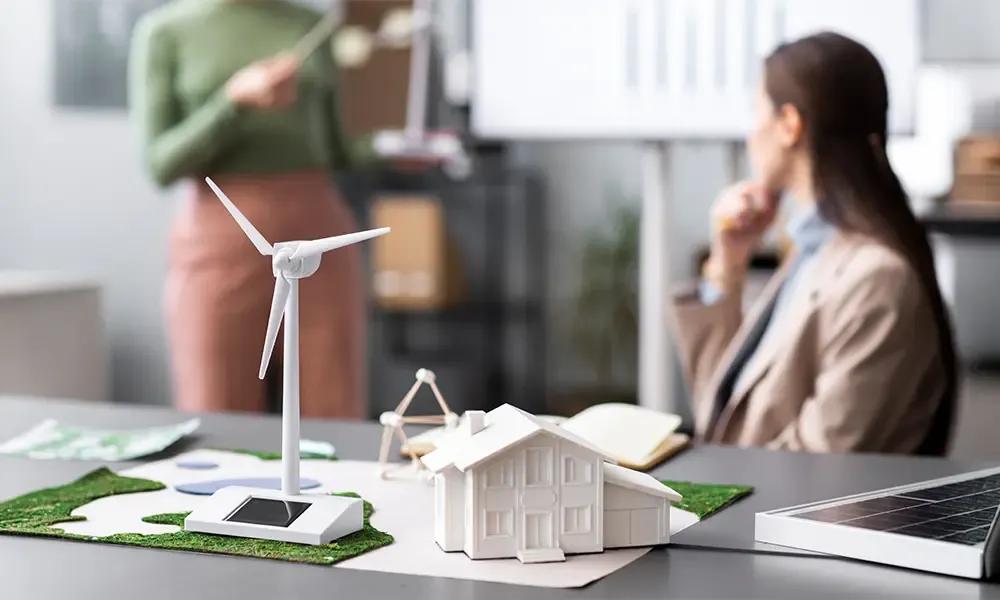
There's a phrase that's been turning up in developer brochures, housing conferences, and property investment discussions with increasing frequency: net-zero. Sometimes it shows up dressed in related language, green homes, sustainable living, carbon-neutral construction. The terminology shifts depending on who's speaking and what they're selling, but the underlying idea is consistent: buildings that produce as much energy as they consume, leave a minimal environmental footprint, and cost their occupants significantly less to run over time.
For a long time, net-zero homes felt like a conversation happening somewhere else. Scandinavian passive houses. German energy efficiency standards. Californian solar mandates. Admirable, perhaps, but remote from the practical realities of buying or building a home in India, where most people are dealing with very different priorities, affordability, connectivity, reliable water supply, and getting a reasonably finished apartment at a price that doesn't require a thirty-year mortgage stretching into uncomfortable territory.
That distance is closing faster than most people realise. The economics of solar have changed dramatically. Green building certification is becoming a serious differentiator in the premium segment. Regulation is moving, slowly, but unmistakably, in the direction of energy performance requirements.
What Net-Zero Actually Means, and What It Doesn't
Before anything else, it's worth being precise about the term, because it gets used loosely enough to cover a very wide range of things, some genuinely meaningful, some largely marketing.
A net-zero home, in its strict definition, is one that produces as much energy over the course of a year as it consumes. This is typically achieved through a combination of two strategies working together: reducing energy demand through efficient design and construction, and generating clean energy on-site, usually through rooftop solar panels, to meet whatever demand remains.
Reducing demand is the less glamorous but arguably more important half of the equation. A home that has been designed with proper orientation, maximising natural light and cross-ventilation to reduce dependence on artificial lighting and air conditioning, consumes significantly less energy to begin with. Insulation, thermally efficient windows and walls, and energy-efficient appliances compound this effect. The result is a home where the solar system required to achieve net-zero is smaller and less expensive than it would be for an identical home that hadn't been designed with efficiency in mind.
What net-zero doesn't mean, in most practical interpretations, is complete disconnection from the electricity grid. Most net-zero homes are grid-connected: they draw from the grid when their own generation falls short (nights, overcast periods) and feed back into the grid when they produce a surplus. Over the course of a full year, the in-flow and out-flow ideally balance to approximately zero, hence the name.
It's also worth distinguishing net-zero energy from net-zero carbon, which is a broader and more complex claim. A home can be net-zero on operational energy while still having a significant carbon footprint embedded in its construction materials, the concrete, steel, glass, and finishes that were manufactured using energy-intensive processes. True net-zero carbon accounting includes this embodied carbon, which is harder to address and less common in mainstream real estate marketing.
The Indian Context: Where Green Building Actually Stands
India's green building sector has matured considerably over the past fifteen years, even if mainstream awareness hasn't fully kept pace with the development. The Indian Green Building Council (IGBC) and the Green Rating for Integrated Habitat Assessment (GRIHA) system have together certified tens of thousands of buildings across the country, making India's green-rated building portfolio one of the largest in the world by footprint.
The concentrated leadership in this space has been in the commercial sector, IT parks, corporate campuses, and institutional buildings where energy costs are large enough and sustainability commitments visible enough to justify the investment in green design. Infosys, Wipro, and a number of large IT developers have built genuinely impressive green campuses that have reduced energy consumption dramatically compared to conventional construction.
The residential sector has been slower, but it is moving. Premium and luxury developers in cities like Bengaluru, Pune, Hyderabad, and Chennai have been increasingly incorporating green design elements into their projects, not always because buyers are demanding it explicitly, but because the differentiation it provides is valuable in a competitive market and because the operational savings are real enough to be a genuine selling point.
What is still relatively rare in India is the full, rigorous net-zero residential building, one designed from the ground up to achieve energy balance rather than simply incorporating some green features as enhancements to a conventional project. These exist, and they're increasing in number, but they remain a niche within a niche. The direction is clear; the pace is the variable.
The Economics: Does It Actually Make Financial Sense?
This is the question that matters most for most buyers, and the honest answer is nuanced: net-zero homes carry a higher upfront cost, but the long-term financial case is increasingly compelling, and getting better as the technology costs continue to fall.
The additional construction cost for a well-designed green residential building in India typically runs between 8% and 15% above conventional construction, depending on the level of green features incorporated, the climate zone, and the quality of design execution. For an apartment project, this premium translates to a higher price per square foot that the developer will typically pass through to buyers.
Against this, the savings on operational costs are real and significant. A solar-powered apartment in a well-designed net-zero building can reduce electricity bills by 60% to 90% compared to a conventional apartment of similar size and usage patterns. In a city like Bengaluru, where electricity costs have been rising consistently and where air conditioning seasons are lengthening, these savings add up to a substantial amount over ten to fifteen years, often exceeding the original premium paid for the green specification.
Water efficiency features, rainwater harvesting, greywater recycling, low-flow fixtures, add another dimension to the cost savings. In cities where tanker water costs are a significant monthly expense for many households, genuinely water-efficient buildings represent a meaningful financial benefit.
The investment case is also strengthening from the resale side. Evidence is beginning to accumulate, not yet definitive, but suggestive, that green-certified homes in Indian cities are commanding a modest premium on resale and attracting buyers faster than equivalent conventional properties. As awareness grows and as green certification becomes a more standard consideration in property searches, this premium is likely to strengthen.
What Features Define a Genuinely Green Home
For buyers evaluating whether a project's green credentials are real or largely cosmetic, knowing what to look for is essential. Green washing, the application of sustainability language to projects that have made superficial or tokenistic changes, is a real phenomenon in real estate marketing, and buyers who can distinguish genuine specification from marketing gloss are better positioned to make informed decisions.
- Solar power generation: Rooftop solar panels with sufficient capacity to meaningfully contribute to the building's energy needs, not just a few panels added as a visual signal. Ask for the installed capacity in kilowatts and how it relates to the building's total energy consumption.
- Building orientation and passive design: A genuinely green building has been designed with solar orientation in mind, units positioned to maximise natural light and cross-ventilation rather than defaulting to a layout that maximises carpet area regardless of environmental performance.
- Thermal efficiency: Wall insulation, double-glazed or thermally broken windows, and cool roof coatings all reduce heat gain and therefore air conditioning load. These are invisible once installed but make a significant difference to both comfort and energy use.
- Energy-efficient systems: LED lighting throughout common areas, energy-star rated lifts, variable-speed pump motors, and HVAC systems with high energy efficiency ratings are features that reduce the building's common area energy consumption, which directly affects maintenance charges.
- Water systems: Rainwater harvesting with adequate storage capacity, sewage treatment plants that enable greywater reuse for landscaping and flushing, and dual-plumbing systems that separate potable and recycled water are the genuine markers of water-efficient design.
- Green certification: IGBC, GRIHA, or LEED certification provides third-party verification that the building's design and construction have met defined standards. It doesn't guarantee perfection, but it is meaningfully more reliable than a developer's self-description of their project as green.
The Honest Limitations: What Net-Zero Can't Fix
A complete picture requires acknowledging what green building, even done well, cannot address.
Location remains the dominant sustainability variable in urban real estate, more so than any building-level green feature. A net-zero home that requires its residents to drive forty-five minutes each way to work generates more carbon through transport than its green building specification saves in energy. The sustainability of urban living is fundamentally a function of density, mixed use, and walkability, things that individual buildings cannot solve on their own and that city planning and policy need to address at a larger scale.
Embodied carbon, the carbon emitted during the extraction, manufacture, and transport of construction materials, is largely invisible in most current green certification frameworks. A building can earn a high green rating while still having been built with enormous quantities of conventionally produced cement and steel, both of which are carbon-intensive to produce. Addressing embodied carbon requires changes in materials specification and supply chain that are only beginning to enter mainstream Indian construction practice.
Frequently Asked Questions
Do net-zero homes actually cost less to live in?
Yes, meaningfully so over time. The primary savings come from dramatically reduced electricity bills, a well-designed solar-powered home can cut electricity costs by 60% to 90% compared to a conventional equivalent. Water-efficient features add further savings in cities where tanker water is a significant household expense. The payback period on the premium paid for green specification has been shortening as solar costs fall and electricity tariffs rise, and is now typically in the range of seven to twelve years for well-designed projects.
Are net-zero homes available in India, or is this still a future concept?
Genuinely net-zero residential buildings are available in India today, though they remain a small fraction of overall housing supply concentrated in the premium and luxury segments in cities like Bengaluru, Pune, Hyderabad, and Chennai. Many more projects incorporate significant green features, rooftop solar, rainwater harvesting, energy-efficient systems, without meeting the full net-zero definition. Green building is firmly in the present tense in Indian real estate; the scale and consistency of its application is what is still developing.
What green building certifications should I look for when buying in India?
The most recognised systems in India are IGBC (Indian Green Building Council), GRIHA (Green Rating for Integrated Habitat Assessment), and LEED (Leadership in Energy and Environmental Design, an international standard). Each operates on a rating scale, Platinum and Gold ratings indicate the highest levels of performance. These certifications involve third-party assessment rather than self-declaration, which makes them meaningfully more reliable than a developer's own green marketing claims.
Does a green rating genuinely increase a property's resale value?
Evidence from Indian markets is still building, but the direction is positive. Green-certified properties in premium segments of major cities are showing a modest but measurable premium over comparable uncertified properties, and market intelligence from agents suggests they attract buyer interest more quickly. As green awareness among buyers grows and as certification becomes a more standard element of property search criteria, this premium is expected to strengthen. Buying a certified green property today is positioning ahead of a shift that most analysts expect to become more pronounced through the decade.
How does the Indian climate affect the case for net-zero homes?
India's climate makes the solar case stronger than in many countries with high green building adoption. Solar irradiance across most of India is high year-round, meaning rooftop solar systems generate electricity more consistently and in greater volume than comparable systems in northern European countries. The primary design challenge for Indian net-zero homes is heating management, keeping interiors comfortable without excessive air conditioning load, which is where passive design features like orientation, shading, insulation, and thermal mass become critical.
Should net-zero or green features be a priority for first-time homebuyers?
For first-time buyers, green features are worth weighting alongside other factors, particularly if the choice is between two comparable properties at similar price points. The long-term savings on electricity and water are genuinely valuable. The resale positioning in a market moving toward greater sustainability awareness is also worth factoring in. However, location, connectivity, builder reputation, and financial structuring of the purchase remain the primary considerations. Green credentials are a meaningful plus, not yet a stand-alone deciding factor for most first-time buyers in the current Indian market.