The Rise of Social Spaces Within Residential Projects

20 Jul 2026
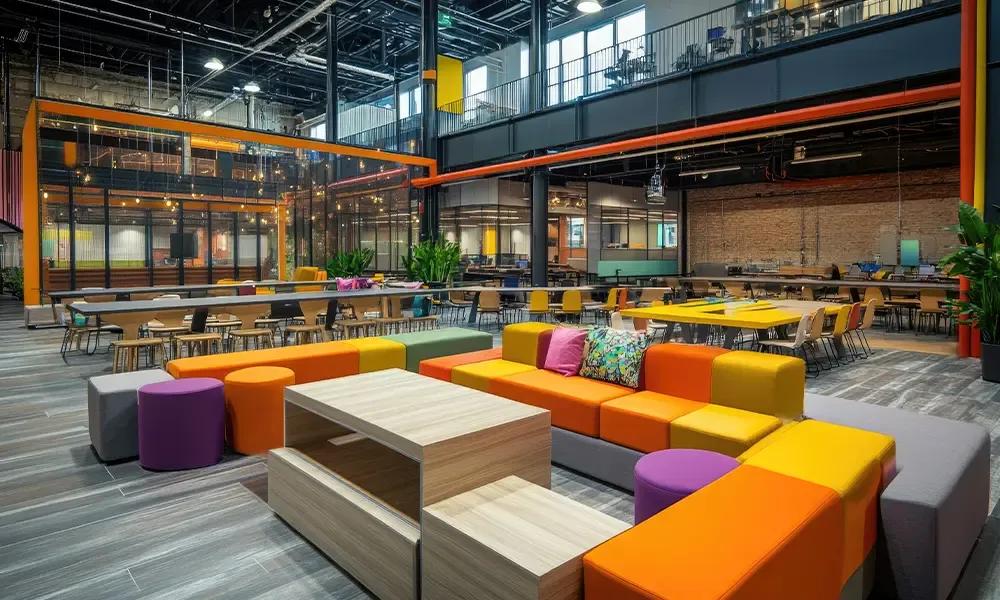
For a long time, the amenity list in a residential brochure was largely aspirational window dressing. A swimming pool that sat quietly underused. A gym with a treadmill and a set of dumbbells. A party hall that opened twice a year for building events. These were boxes checked to satisfy a buyer's sense that they were getting something beyond four walls, without any real expectation that the spaces would become central to how residents actually lived.
Something has changed, and it is not subtle. Across India's major residential markets, social spaces within apartment communities have moved from the periphery of the project offering to its core. Developers are spending significantly more on designing and building them. Buyers are asking more pointed questions about them during site visits. And residents, particularly those who moved through the pandemic with a renewed awareness of how much community matters, are using them in ways that earlier generations of apartment dwellers simply did not.
Why has this happened, and what does it mean for the future of residential design in India?
What Actually Changed During and After the Pandemic
The shift began visibly during the pandemic, though its roots go deeper. When people were confined to their homes for extended periods, the quality of their immediate living environment became acute in a way it had never been before. The apartment complex was no longer just a place to sleep between long days at the office. It was everything: workspace, social venue, exercise space, and the entire boundary of daily life.
What residents discovered during this period was that most residential developments in India were not designed for this kind of full-time habitation. The social infrastructure was minimal. Shared spaces, where they existed, were often poorly designed, poorly maintained, or simply too limited to serve a population that was suddenly home all day. The contrast between well-designed developments with thoughtful communal spaces and those without became impossible to ignore.
Post-pandemic, that awareness has not faded. If anything, it has consolidated into a buyer preference that is now shaping purchase decisions in ways that go beyond price per square foot and carpet area comparisons. The questions buyers ask on site visits have shifted. How is the clubhouse used day to day? Are there spaces for children to play and adults to sit nearby? Is there somewhere to work outside the apartment without going to a cafe? These questions reflect a changed relationship with the home that is not going back.
The Co-Working Lounge as Standard Amenity
Perhaps the most tangible manifestation of this shift is the emergence of co-working lounges and business centres as standard features in mid-premium and above residential developments. A space with good internet, ergonomic seating, natural light, and meeting room access within your own building serves a population that is increasingly hybrid in its work patterns, without the cost or commute of a co-working membership outside.
This is not a niche amenity for a small segment of residents. The proportion of India's urban professional class that works from home for at least part of the week has grown enormously and shows no signs of reversing. For these residents, a well-designed co-working lounge within the building is as functionally important as the gym or the pool. Developers who understand this are designing spaces with stable power supply, acoustically managed zones for calls, and layouts that allow both focused individual work and small group collaboration.
The co-working lounge also solves a specific problem of apartment living: the need for a professional environment during work calls when the home itself is occupied by other family members. In a 2BHK with children at home, having a quiet, professional-looking space two floors down changes the daily work experience significantly.
Community Kitchens, Open Lawns, and the Social Layer
Beyond work-enabling spaces, the rise of social infrastructure in residential projects reflects a broader desire for community that urban apartment living has historically struggled to provide. The anonymous quality of large apartment complexes, where hundreds of families share an address without ever meaningfully knowing each other, has been a persistent critique of this housing format.
Community kitchens, event lawns, barbecue areas, outdoor amphitheatres, and curated event programming are all attempts to engineer social connection within the built environment. Whether by design or by happy accident, they create the conditions for the kind of neighbour relationships that used to happen naturally in lower-density housing but have largely been lost in the shift to high-rise apartment living.
Several developers have gone further, hiring community managers whose role is to programme social spaces with events, workshops, and activities that bring residents together. Cooking classes, fitness challenges, children's activity groups, and cultural events have all appeared as part of the community programming in premium projects. The reasoning is straightforward: residents who feel connected to their community are more satisfied with their building, more likely to refer others, and less likely to resell in the near term.
Children's Spaces: The Design Shift from Afterthought to Priority
The treatment of children's spaces within residential projects has undergone one of the more visible changes in recent years. The standard offering for a long time was a small play area with a slide and a swing, positioned on a patch of ground that was left over after everything else was accommodated. It served its minimum purpose without any real thought about how children of different ages use space differently, or what parents need to be able to do while their children are playing.
Contemporary projects in the premium segment are designing children's environments with genuine intention. Age-segmented play areas that serve toddlers differently from ten-year-olds. Soft surface areas adjacent to benches where parents can sit within sight. Indoor play and craft rooms for rainy days or harsh summer afternoons. Teenage spaces with table tennis, foosball, and seating that isn't just scaled-down adult furniture.
This matters for property value as well as liveability. Projects with well-designed children's environments attract a specific and stable buyer demographic: families in the five-to-fifteen-year age bracket of child-raising who are making a long-term location decision based on more than just price. These buyers tend to hold their properties longer and make for more stable residential communities.
What Buyers Should Actually Evaluate
For buyers using social space quality as a decision factor, a few practical evaluation approaches work better than simply reading the amenity list in a brochure.
- Visit on a weekday evening rather than a Sunday afternoon. Weekday usage patterns tell you whether residents actually use the spaces day-to-day, not just on weekends when the developer might have scheduled a site visit.
- Ask about the maintenance charges specifically allocated to community spaces. Well-maintained social spaces require ongoing operational budget. A clubhouse that looks good at launch but has no funded maintenance plan will deteriorate within a few years.
- Assess the resident-to-amenity ratio. A 500-unit complex with a 1,000 square foot co-working lounge serves its residents very differently from a 150-unit complex with the same space.
- Look at the design of outdoor social spaces as carefully as indoor ones. Shaded seating, weather-appropriate surfaces, and lighting for evening use all determine whether outdoor common areas are used year-round or only on perfect-weather days.
Frequently Asked Questions
Do better social spaces increase property resale value?
Evidence from premium residential markets in India's major cities suggests that projects with thoughtfully designed and well-maintained social infrastructure command a modest premium on resale and attract buyers more quickly than comparable projects without it. The effect is more pronounced in mid-premium and luxury segments where buyers are making a considered lifestyle choice, rather than purely a budget decision.
Are maintenance charges higher for projects with extensive social spaces?
Generally, yes. More complex amenity packages require more maintenance staff, ongoing repairs, and energy costs, all of which flow through to monthly maintenance charges. Buyers should request a maintenance charge breakdown before purchase, not just a total figure, to understand what is driving the number and whether the social amenities are adequately funded for the long term.
Are co-working spaces within residential buildings replacing external co-working memberships?
For many hybrid and remote workers, a well-designed in-building co-working space can replace the need for an external membership for most daily work needs. However, those who frequently meet clients or collaborators from outside the building may still find the separation useful. The in-building option is most valuable for focused individual work and internal video calls.
How do I assess whether a project's social spaces will be used by residents?
The best indicators are the current resident count relative to total unit count (higher occupancy generally means more active community use), the presence of a resident association or community manager, and evidence of past events or programming. For under-construction projects, speaking to residents of the developer's completed projects nearby gives a sense of how their community spaces function post-handover.
What is the minimum social infrastructure I should expect in a mid-segment apartment project?
A well-designed mid-segment project should offer at minimum: a functional clubhouse with gym and indoor recreation, children's play area with age-appropriate equipment and parental seating, open lawn or landscaped common area for informal gathering, and a multi-purpose hall for community events. Above this baseline, co-working areas, senior-friendly spaces, and outdoor fitness zones reflect a more considered approach to resident wellbeing.

